
In 2026, a company’s standing in the technological landscape is defined by its transition from static record-keeping to autonomous, AI-driven orchestration. Organizations currently leading the market have moved beyond basic administrative tools, instead utilizing integrated ecosystems that leverage generative AI for predictive talent management, real-time compliance monitoring, and personalized employee experiences. While laggards remain tethered to siloed legacy systems, the modern benchmark for success is a unified "skills-first" infrastructure that automates 30% of operational scheduling and reduces recruitment overhead by nearly a third through algorithmic filtering.
The Evolution of the Digital Workplace Infrastructure
The shift in corporate infrastructure over the last decade has been nothing short of transformative. In the early 2010s, the primary goal of digital tools was to digitize paper records. By 2020, the focus shifted to cloud accessibility and remote work enablement. Entering 2026, the narrative has shifted toward "Intelligence-as-a-Service."
Modern organizational health is now measured by the fluidity of data across departments. Data silos are no longer just an inconvenience; they are a competitive liability. According to SHRM, the ratio of department-specific expenses to overall operating costs has reached 2.4% in 2026, which is double the investment levels recorded in 2017. This surge in spending highlights a global recognition that the "people operations" stack is the central nervous system of a resilient enterprise.
Categorizing the 2026 Tech Tiers
To understand where a specific company stands, it is helpful to categorize the current market into three distinct tiers of technological maturity:
-
The Legacy Tier - Characterized by on-premise servers, manual data entry, and fragmented tools that do not communicate. These organizations often struggle with high turnover and slow recruitment cycles because their data is retrospective rather than predictive.
-
The Transitional Tier - These companies have migrated to the cloud and utilize standard HR software systems to manage payroll and benefits. However, they still rely heavily on human intervention for data analysis and lack the automated "nudge" culture of more advanced peers.
-
The Autonomous Tier - The gold standard in 2026. These organizations use "agentic" AI, tools that don't just provide data but take action. For example, an autonomous system might identify a flight risk in a key department and automatically trigger a retention workflow or a personalized development plan.
The Rise of AI-Integrated Ecosystems
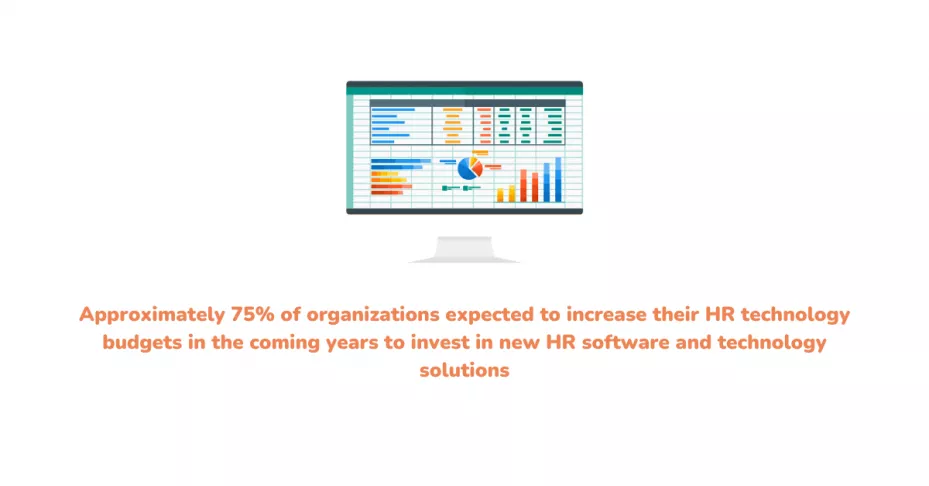
The most significant differentiator in 2026 is the depth of AI integration. It is no longer enough to have an AI "add-on." Leading companies have rebuilt their entire workflows around machine learning. Hirebee.ai reports that 80% of organizations are projected to integrate AI into core functions by the end of 2026. Furthermore, 92% of firms are planning to escalate these investments over the next three years.
This integration manifests most clearly in recruitment. The manual review of resumes is becoming an obsolete practice for high-volume hiring. Advanced HR software now utilizes natural language processing (NLP) to filter out approximately 40% of applications before a human recruiter even views the dashboard. This isn't merely about speed; it is about precision and the reduction of unconscious bias through standardized data points.
The Skills-First Revolution
A critical tactical shift in 2026 is the move away from traditional job titles toward a "skills-based" architecture. In this model, the organization is viewed as a collection of skills rather than a hierarchy of roles.
Data from Eightfold AI suggests that organizations adopting this "skills-first" approach within their management systems see 89% higher retention rates. This is because the software can map an employee’s current capabilities against future internal opportunities, creating a transparent path for upward mobility that was previously invisible. When employees see a clear future driven by data-backed development, they are significantly less likely to seek external opportunities.
Key Capabilities of the Modern HRMS
In 2026, the distinction between various HR software features has blurred as platforms strive to become "all-in-one" solutions. However, the most successful implementations focus on four pillars of functionality:
Predictive Analytics and Forecasting
Instead of reporting on what happened last quarter, 2026 tools focus on what will happen next. Predictive models can now forecast staffing needs six months in advance by analyzing market trends, historical turnover, and project pipelines. This allows for proactive rather than reactive hiring.
Self-Service and Employee Agency
The "consumerization" of corporate tools is complete. Employees expect a mobile-first experience where they can manage benefits, request leave, and access training with the same ease they use for online shopping. This reduces the administrative burden on staff and increases overall data accuracy.
Real-Time Compliance and Global Payroll
With the rise of the "borderless" workforce, managing compliance across multiple jurisdictions has become a primary pain point. Modern tools now include "Global Guardrails" automated updates that adjust payroll and tax withholdings in real-time as local laws change, mitigating the risk of costly legal errors.
The "Usage Gap" and Engagement
A fascinating trend in 2026 is the disparity in how these tools are perceived across the hierarchy. DHR Global notes that while 74% of C-suite leaders report higher engagement due to generative AI tools, only 27% of entry-level employees feel the same. This "usage gap" suggests that while the technology is being purchased at the top, the tactical implementation at the "ground level" often fails to provide clear value to the individual contributor.
Economic Impact and ROI of Tech Tactics
The financial justification for high-level tech investment has never been clearer. Beyond simple time savings, the ROI is found in the optimization of the workforce. According to Yomly, AI-driven workforce optimization is currently responsible for a 30% increase in operational efficiency, particularly in complex areas like shift scheduling and resource planning for multi-location enterprises.
Furthermore, the cost of talent acquisition continues to drop for those with the right stack. The implementation of AI-powered hiring tools is reducing recruitment costs by up to 30%. This is achieved by shortening the "time-to-hire" and improving the "quality-of-hire," which in turn reduces the astronomical costs associated with early-stage turnover.
Navigating the Small Business Landscape
While large enterprises often lead in spending, the availability of specialized HR software that small business owners can utilize has leveled the playing field. In 2026, small to medium enterprises (SMEs) will have access to "modular" platforms. This allows a company with 50 employees to utilize the same high-level security and AI-driven insights as a Fortune 500 company, but at a scale and price point that fits a leaner budget.
For SMEs, the tactic is not to build a massive custom infrastructure but to select a "core" platform that offers robust API integrations. This allows the organization to remain agile, plugging in new LSI-adjacent tools (like niche performance management or wellness apps) as the company grows.
The Role of HRMS in Modern Culture
In 2026, technology is the primary driver of culture. If the digital interface of a company is clunky, slow, or outdated, it sends a clear message to the workforce about the organization's commitment to innovation. Conversely, a seamless, high-tech experience fosters a culture of transparency and efficiency.
The integration of HR tools that support asynchronous work is no longer optional. With global teams operating across time zones, the "system of record" must also be a "system of collaboration." Features that allow for continuous feedback loops, rather than an annual performance review, are essential for maintaining alignment in a decentralized environment.
Data Privacy and Ethical AI in 2026
As the reliance on algorithms grows, so do the ethical stakes. In 2026, "Where Your Company Stands" is also a question of ethics. Organizations are now being scrutinized not just for their efficiency, but for the transparency of their AI models.
Questions of data sovereignty and "algorithmic fairness" are at the forefront of the 2026 agenda. Leading systems now include "explainable AI" (XAI) features, which allow managers to see exactly why an algorithm made a certain recommendation, whether it was for a promotion, a salary adjustment, or a candidate selection. This prevents the "black box" effect and ensures that the technology remains a tool for human decision-makers rather than a replacement for them.
Future-Proofing for 2026 and Beyond
Standing still in 2026 is the equivalent of moving backward. The roadmap for the next 18 months suggests an even deeper move toward "Hyper-Personalization." This involves the system automatically tailoring every aspect of the employee journey, from the benefits package to the learning curriculum, based on individual preferences and life stages.
To remain competitive, organizations must audit their current stack against the "Autonomous Tier" benchmarks. This includes:
-
Assessing if data flows seamlessly between payroll, recruitment, and performance modules.
-
Evaluating whether current tools provide predictive insights or merely historical reports.
-
Determining if the entry-level workforce feels the same "productivity lift" from the technology as the executive team.
The Strategic Imperative
The 2026 landscape for HR management software is defined by a paradox: as the technology becomes more automated and "robotic," its primary purpose is to make the workplace more human. By removing the administrative "sludge" that has historically bogged down people operations, these tools allow leadership to focus on high-value strategic initiatives, like culture building, leadership development, and long-term workforce planning.
Whether an organization is a small startup or a global conglomerate, the tactical goal remains the same: to create a digital infrastructure that is invisible, intuitive, and intelligent. Companies that achieve this will not only survive the shifts of 2026 but will be the ones defining the benchmarks for 2030.
Why OrangeHRM?
OrangeHRM is meticulously engineered to be the definitive human capital management solution, transforming the complex challenges of people management into strategic opportunities for growth and success. Our unified, cloud-native platform integrates all critical HR functions, from initial recruitment and compliance management to performance tracking and employee engagement, into a single, intuitive HR application that eliminates data silos and scales effortlessly with your business. We empower your team to move beyond administrative tasks, leveraging cutting-edge AI and advanced analytics to make informed, predictive decisions about your workforce. Designed for global teams and built with user adoption in mind, OrangeHRM provides the robust security and flexibility necessary to thrive in the complex landscape of 2025 and beyond. Are you ready to see how our complete solution can redefine your people strategy? Book a FREE demo today and take the first step toward a future-proof HR infrastructure.